
Our Favourite Conservation and Restoration Projects of the Decade
As we enter into a new decade, we can’t help but think about how far we’ve come over the last ten years. For 23 years now, Stamford Stone has been supplying the best in natural stone to architects, self-builders, and building conservationists. And this last decade has been no different. We’ve seen our stone incorporated into some pretty exciting projects; not to mention our acquisition of the Clipsham Quarry (Clipsham Bidwells) in 2018 which has made us the exclusive supplier of Clipsham limestone worldwide.
Yes, it’s been a memorable decade for Stamford Stone. And, in celebration, we’re going to take a look back at our favourite conservation and restoration projects from the 2010s.
1. Restoration and Conservation of The Church of King Charles the Martyr

The thought of natural stone is almost synonymous with church buildings. So, we were delighted when the Church of King Charles the Martyr, Herefordshire, approached us in 2017 to look at our natural stone range after receiving a generous £100,000 inheritance in a member’s will.
They had decided to use part of this donation to invest in restoration works for the church. Their ambition was to renovate the church floor and build new altar steps out of natural stone.
The Significance of the Altar
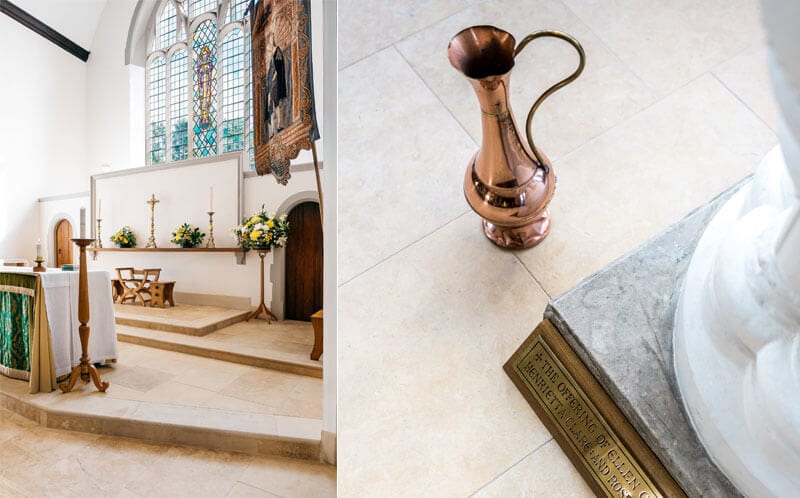
The story of the altar at the Church of King Charles the Martyr is an interesting one, wrought with symbolical meaning and a deep history of how church services have changed over the years. As an Anglo-Catholic foundation, mass was originally celebrated with the priest’s back to the congregation, but pressure was put on the church to bring the altar forward in the early sixties to face the congregation instead. The altar was then returned to its former position with the induction of a new priest in 1968 and moved forward again when its first Evangelical priest, Revd Ray Williams, was appointed.
And now Stamford Stone has become a part of new restoration efforts, by providing stone for 45 linear metres of steps around the altar as it stands today.
2. Restoration of the University Arms Hotel

The University Arms Hotel is situated in Cambridge – a city known for its magnificent stone buildings. Interestingly, Cambridge itself has no natural stone reserves so has historically imported stone to create the city as you know it today. In particular, limestone from Lincolnshire has been used in the construction of Cambridge buildings since medieval times.
And the University Arms Hotel is one of the jewels in Cambridge’s crown. Established in 1834, the University Arms Hotel was listed as one of Time Magazine’s Top 100 Places to Visit in the World in 2019 – only one year after we took part in its £80 million restoration and refurbishment project.
A Restoration Project of Enormous Scale

We’re incredibly proud of the role we played in the restoration of this Regency-style, historic building which has stood for over 180 years. With our expertise in historic building conservation, we supplied 500 tonnes of Clipsham limestone to the restoration efforts of the University Arms Hotel, working in collaboration with renowned architect Martin Brudnizki and John Simpson Architects.
Our local Clipsham limestone met all the stringent structural requirements for this prestigious project. It offered a rich and varied tone with a greater depth of colour after a supply issue stopped the restorers from working with Bath stone.
How Our Limestone Was Used
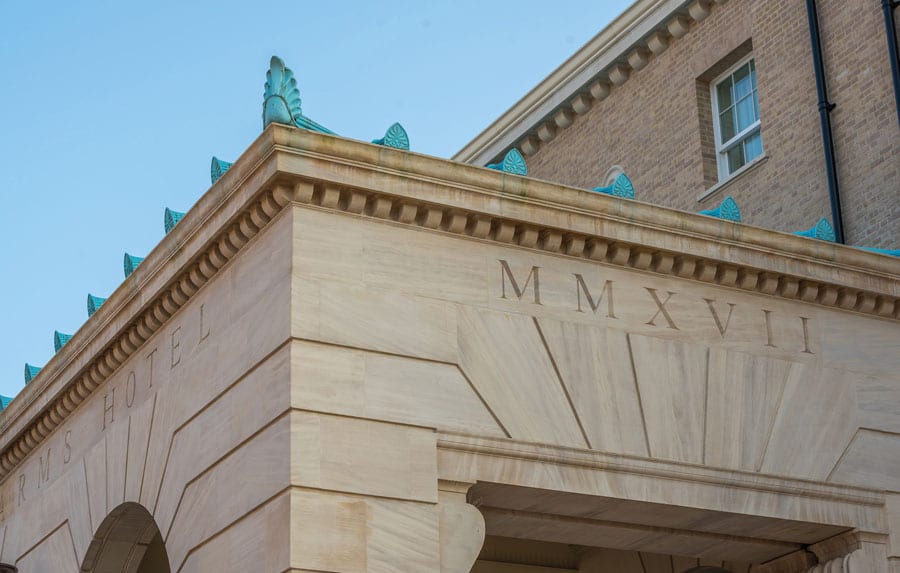
It was a challenge for the architects to find stone that could match seamlessly with the existing structure. Our limestone was used to create a solid stone Porte Cochère (a coach gate or carriage porch-like structure at the main entrance). This was a wonderful way to honour the historic roots of the hotel.
You can read more about the project on our website’s case study.
3. Restoration and Conservation of Jesus College – West Court
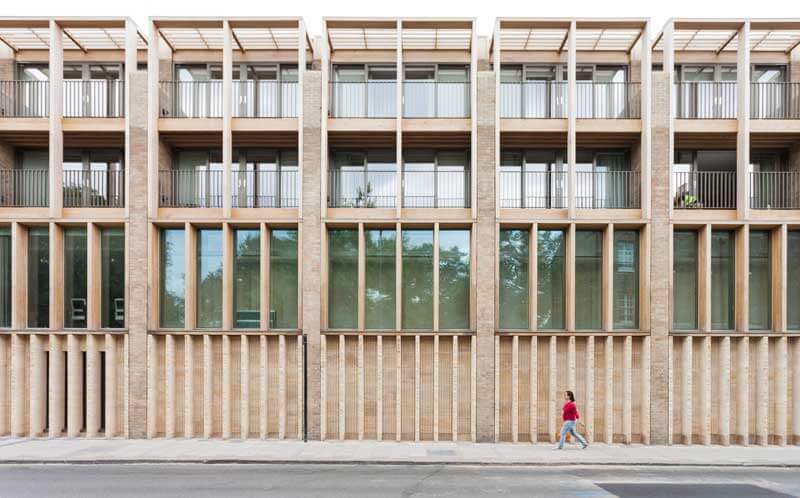
The next building on our list – the West Court of Jesus College – takes us back to the prestigious stone landscape of Cambridge. This restoration and conservation project involved combining modern and traditional design and both machine and hand carving techniques.
This was a particularly exciting project for us; not only because of the reputation of Cambridge University and its historic buildings, but also because we played a large role in the design process. This was in addition to supplying exterior stone and limestone from both our Clipsham Medwells and Greetham quarries.
How Our Natural Stone Was Used
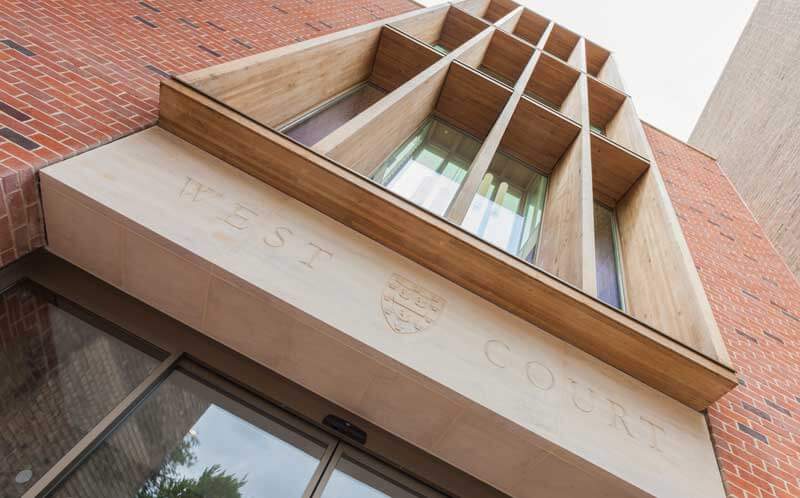
Our stone was used to create features throughout Jesus College’s West Court, including more than 200 metres of once-weathered copings throughout the main building and café terrace. We also supplied fascia panels over the front entrance which featured the Jesus College crest, hand-carved by our master stonemasons.
Our Partners in this Restoration Project
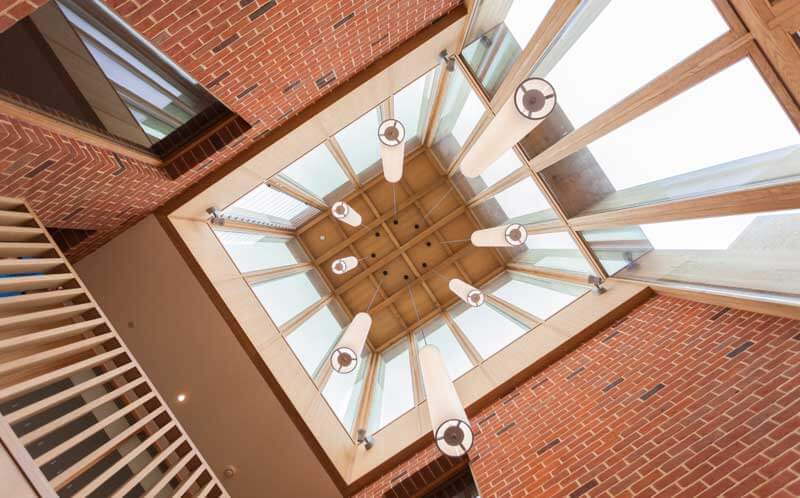
This historic building was starting to look a bit dated with its 70s style. To conserve and restore it, we worked closely with Cocksedge and Niall McLaughlin Architects, who were contracted alongside us to complete this project in 2014.
4. Creation of the New Orangery at Rushton Hall
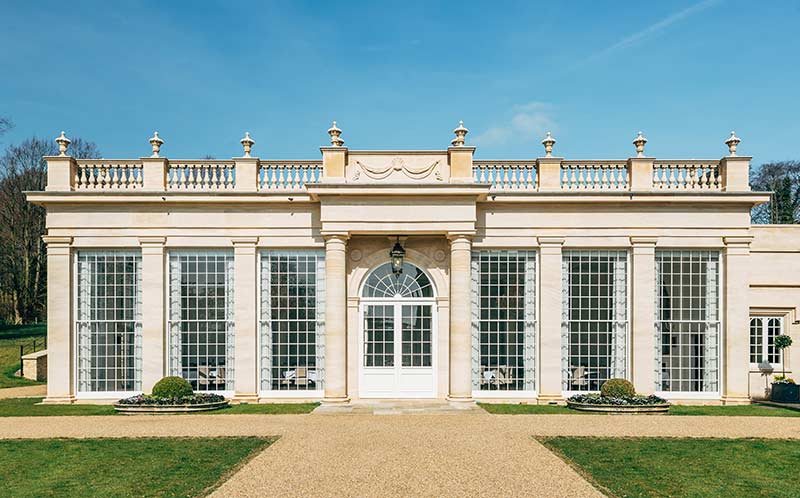
Rushton Hall is one of the finest hotels in Northamptonshire. We were proud to supply stone for the building of its new Orangery. This was a great honour to us at Stamford Stone, as the hotel itself has structures dating back to the 16th century. As always, conservation and restoration projects like this present a unique challenge in remaining true to the original building style while creating something original.
The Architecture of the New Orangery

The architecture of the new Orangery was to be as grand as the original hotel buildings. This included ornate facades and mouldings that required select expertise to bring it to life. We also had to carefully analyse the proposed structures to consider the nature of the load-bearing elements of the design. Bringing together structural integrity, safety, and the best of classic design was a challenge we took in our stride.
Our Partners in the Building of the New Orangery

From 2015, we worked closely on this project with Pavilion Estates and Malcolm Strangeway Architects over a period of 18 months. The new Orangery was completed in the summer of 2017 at a total cost of £7 million.
Read About These Projects in More Detail
We love celebrating our successes and also giving our customers – both old and new – the chance to gain an insight into the quality and skill of our work. If you’d like to hear more about our conservation and restoration work and are keen to read full case studies of these particular projects, visit us here.