
History of Stonehenge. Megalithic Monuments
Those of you with an interest in English history will undoubtedly appreciate the significance of Stonehenge. Recognised alongside Avebury as a World Heritage Site, Stonehenge has been a continuous source of wonder and fascination over the centuries. And, as global limestone suppliers ourselves, we find it truly inspiring to re-examine the fascinating story of Wiltshire’s standing stones.
Prehistoric Phenomena

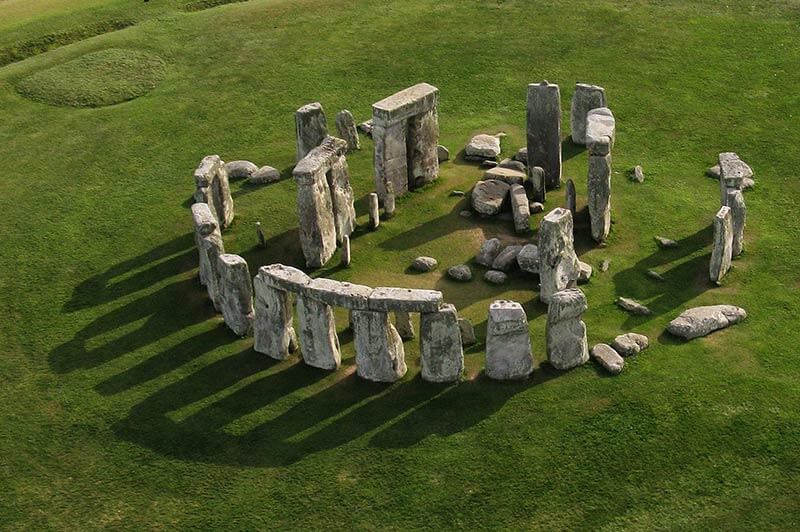
Historical investigation has revealed that construction of Stonehenge began during the Neolithic period, with the world-famous stone circle being erected some 2,500 years ago. However, it took more than a millennium for the site to take its recognised shape. Outstanding levels of organisation and physical effort would have been required to transport and set the stones in place. The accomplishment is even more impressive when you consider the types of primitive tools available to the Neolithic builders.
There is little doubt over the symbolic and spiritual significance that Stonehenge held for ancient communities. The area of chalk downland would have stood out quite distinctively within the surrounding acres of woodland. The earliest excavation carried out under the leadership of William Hawley from 1919 to 1926 revealed a mixture of bones – some cremated and some not, signalling the use of Stonehenge as a funeral site. Links to the heavens are also quite apparent. The standing stones were carefully aligned to the midsummer sunrise and midwinter sunset.

The archaeological investigations of William Hawley revealed that construction of the Stonehenge site occurred over three distinct phases. The initial period would have involved the digging of a series of chalk pits, otherwise known as Aubrey holes and named after the antiquarian John Aubrey. A series of ditches were also discovered during the early excavations, thought to have been dug using tools such as the antler pick. The digging of these ditches would have been followed by two stages involving the erection of increasingly impressive and sizeable stones.
Wondrous Workmanship

The awe-inspiring megaliths stand as testament to the ingenuity and technical understanding of the ancient people. It would have taken a great force of strength and will to haul the Stonehenge sarsens into place with sledges and ropes. They would have to be carefully arranged using great stone counterweights within purpose made ditches. The skill of the Stonehenge craftsmen is further evidenced by the perfectly horizontal lintels, which were dressed with mortises for structural stability. Fifty of the sarsen stones remain standing to this day. However, it is thought that more would have featured in the original construction.
While the magnificence of the outlying sarsen stones cannot be argued, it is the central bluestones which have been the greatest source of wonder over the centuries. The archaeological investigations have revealed that 80 of these bluestones were collected in a horseshoe shape within the original structure. However, there has been intense debate about the methods that might have been used to transport the bluestones; given that they have been traced back to the Preseli Hills of North Pembrokeshire in Wales.
Theory of Transportation

Historical experts have questioned whether the early people could possibly have transported the bluestones across the 140 miles of rugged landscape to their final Wiltshire resting place. It has been suggested that the stones, each weighing roughly the same as a car, could have been transported naturally as a result of glacial movement. However, it is now widely recognised that the movement of the bluestones involved a highly significant combined effort by the prehistoric people. The most widely accepted theory is that the bluestones were carried over land and sea before being carefully arranged in the stone circle. Indeed, recent excavations carried out under the guidance of Mike Parker Pearson suggest that the stones would have been hammered and carved out of the Welsh rock-face before being transferred to wooden sledges and carried away.
Expert Opinion
Writing about his grand tour of the UK, world-famous author Bill Bryson was moved to say, “Stonehenge really was the most incredible accomplishment. It took five hundred men just to pull each sarsen, plus a hundred more to dash around positioning the rollers. Can you imagine trying to talk six hundred people into helping you drag a fifty-tonne stone, eighteen miles across the countryside and muscle it into an upright position, and then saying, ‘Right, lads! Another twenty like that, plus some lintels and maybe a couple of dozen nice bluestones from Wales, and we can party!’ Whoever was the person behind Stonehenge was one dickens of a motivator, I’ll tell you that.”
While there is ongoing conjecture about the movement of the bluestones, the greatest debate surrounds the motivation of the Neolithic people. However, Mike Parker Pearson and his archaeological team have also gone a great way towards the unlocking of this mystery. Using the most advanced radiocarbon dating techniques, they have discovered that Stonehenge had a key function as a burial ground from its earliest construction to the third millennium BC. Given its stand-out presence in the wilds of southern England, and the level of physical effort required for the movement of the stones, it is no great stretch to conclude that Stonehenge was used for the burial of the rich and famous. Indeed, the discovery of richly adorned grave goods in one of the Aubrey holes has led Parker Pearson to suggest that Stonehenge could have been used as an exclusive burial ground for one single dynasty.
Unravelling the Mystery

As stone specialists, the team at Stamford Stone find the unravelling of the Stonehenge mystery particularly fascinating. We consider it something of a blessing to be able to use advanced quarrying tools and machinery. Having said that, we are also advocates of hand-carving and our team of expert masons are testament to that.
We manage and quarry two sites in Lincolnshire and we are the exclusive global supplier of Clipsham limestone. We are particularly delighted at being able to supply this superior stone to our Lincolnshire customers. If you’d like to see our exclusive selection of stone products, visit our showroom near Helpston, just a stone’s throw from the historic stone town of Stamford. Alternatively contact us on 01780 740 970 or send us a request.