
How is Limestone Used in a Building?
Here at Stamford Stone, we are premier limestone stone suppliers. Limestone as a building material can be seen across the country in some of those most memorable architectural stone structures of our nation. It’s limestone that comes to mind when you picture the stunning colleges of Oxford and Cambridge, and limestone again when you imagine the Palace of Westminster.

Some of the longest standing and most beautiful buildings we know are built from limestone, so it’s no surprise that limestone has a reputation for finesse and grandeur.
In this article, we’re going to take a look at some of the ways natural stone is used in a building to enhance its aesthetics, as well as how limestone plays a huge role in restoring heritage buildings.
The Qualities of Limestone
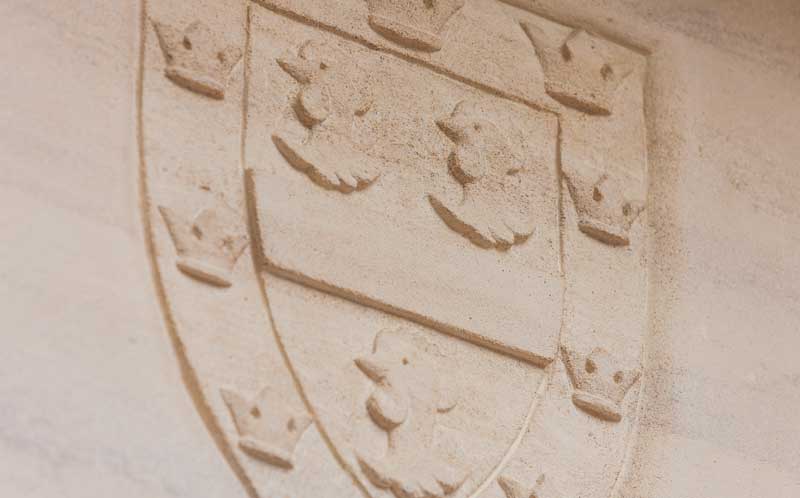
Limestone is a pale-coloured stone that may appear in a number of shades when weathered. This is due to the number of sediments it contains such as clay, as well as its high fossil content. They made up of at least 50% calcite.
As an architectural stone, it is popular due to its graceful ageing; the beauty of limestone is timeless.
The Qualities of Clipsham Limestone
As most of our followers know, we at Stamford Stone are the exclusive global suppliers of Clipsham limestone. We are the chosen limestone stone suppliers for architects all over the country due to the superior qualities of Clipsham limestone.
This particular it is a type known as Oolitic limestone – meaning it is composed of tiny grains called oolites.

Clipsham limestone has proven to be more resilient and hard-wearing than other limestones, such as the Yorkshire Anston limestone which was used to build the Houses of Parliament. As the Houses of Parliament began to deteriorate, it was Clipsham limestone that was used to make repairs because it was better able to resist London’s acidic fogs. Clipsham limestone is also particularly resistant to freezing temperatures.
Limestone as an Architectural Stone

Limestone has been used as a building stone for centuries. Cathedrals, colleges, and hotels in historic areas around the UK all owe their existence to limestone. Today, it is more commonly used as a building stone in restoration projects. That being said, new builds can also benefit from the beauty and longevity of local Lincolnshire limestone.
Limestone can be used in architecture for:
- Building/masonry stone – the stone used to construct a building
- Floor tiles – to pave indoor and outdoor spaces
- Stringers – a long structural horizontal beam used in architecture
- Quoins – the corner edge of a building/cornerstones
- Facades – the front exterior wall of a building; these can be part of a building’s structure, or applied to the front of a completed building like a skin
- Columns – columns can be either structural or purely decorative
- Porticos – a portico is a porch-like structure supported by columns at the entrance of a building.
These are just some of the ways that it can be used to create magnificent buildings to last the test of time.
Limestone as a Decorative Stone

As well as being part of the inherent structure of a building, it can also be used to enhance and accentuate the design of a building.
Decorative touches in limestone might include:
- Copings – a flat stone used to top walls for better aesthetic and to prevent damage from rainfall
- Cornices – a type of decorative moulding over a door, window, or along the upper edge of a wall
- Wall cladding – a decorative wall covering that gives the appearance a wall is made from a different material
- Fireplaces – it can be used to create gorgeous decorative fireplaces
- Balustrades – decorative spindles used in fencing, staircases and other architectural features
- Name and date stones – decorative plaques that are engraved with significant names and dates
It creates a feeling of elegance and timelessness, which is why it’s such a popular choice in architectural design.
Limestone in Restoration and Heritage

When it comes to working with heritage buildings, such as Grade I and Grade II listed buildings, it is one of the most widely used materials. This is because it – especially our Clipsham limestone – is often found to be the closest match to buildings created long ago.
There are certain guidelines in place to make sure that listed and heritage buildings are properly restored and conserved.
Historic England gives the following guidelines:
The replacement stone should be similar in colour, texture, physical, chemical and mineralogical properties to the original
Any intervention must not harm the original building fabric nor the significance of the structure
All work must comply, where appropriate, with the Listed Building Consent framework and British and European Standards.
That’s why we at Stamford Stone are so much more than limestone stone suppliers; we are experts in the properties and qualities of our natural stone, and how these come into play when it comes to working with buildings old and new.
Take a look at some of our previous restoration and conservation efforts. We’ve been the limestone stone suppliers for some incredible projects, including The University Arms Hotel in Cambridge, the West Court of Jesus College, and the New Orangery at Rushton Hall.
Making Use of Stamford Stone’s Architectural Services

While it is used in historic buildings throughout the UK and Europe – and has shown it lasts the test of time – it is considered a low-medium density building stone. For this reason, you should always consult with an expert architect about how to best use it to suit your needs and ensure your build is structurally sound for the long-term.
Remember, here at Stamford Stone we offer a range of architectural services. We’re here to help you choose the right stone for you. We can also help create designs and partner with builders and architects throughout the building process. We work with architects, self-builders, conservationists and more.
Investment in Machinery

As both manufacturers, and stone suppliers, we have continually invested in some of the most advanced cutting technology on the market. Our CNC machine interprets design data and cuts stone automatically, resulting in better efficiency, greater productivity and less waste. To boost our flooring range, we installed a fully automated Donatoni tile line – combined with our Lincolnshire quarries, this means we have the capacity to produce approximately 1000 m² of limestone tiles per week.

Every year, we quarry approximately 20,000 tonnes of premium grade masonry block from Clipsham and up to 40,000 m² of walling stone and 26,000 m² of flooring stone from Swaddywell. We produce 75,000 tonnes of block stone for flooring and aggregate.
We cut every item to order, giving you maximum versatility with sizing and moulding.
Simply ask our experts for advice about what will suit your project best, we are happy to help.
Make Stamford Stone your Natural Stone Stone Supplier

To find out more about using limestone for your next project, to order a sample, or to speak to an advisor, simply get in touch today.