
How Stamford Stone supports sustainable stone sourcing
Sustainability in construction doesn’t begin at the building stage — it starts well before, with the materials chosen for the job. At Stamford Stone, we know that responsible sourcing plays a key role in sustainable development. That’s why every step of our operation, from limestone quarry to delivery, focuses on minimising environmental impact and promoting long-term stewardship. Here’s how we ensure that our Clipsham limestone meets the high environmental and ethical standards expected by today’s construction industry.
Local sourcing to cut carbon emissions
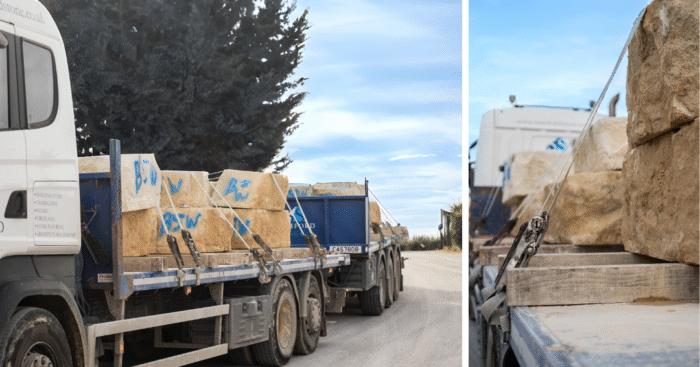
Transporting heavy materials over long distances contributes to a project’s carbon footprint — in the UK, the construction industry accounts for some 2.5% of total UK carbon dioxide emissions. To help address this growing problem, Stamford Stone keeps its supply chain local, extracting our Clipsham limestone from quarries in Lincolnshire and processing it just 20 miles away at our production site.
This close proximity drastically reduces the carbon emissions associated with transport, especially when compared with imported stone or more carbon-intensive alternatives like concrete. By using materials from a sustainable local natural stone quarry, builders can reduce their environmental impact. As an added bonus, sourcing locally supports the regional economy and reduces reliance on global supply chains.
Sustainable quarrying and environmental responsibility
Our commitment to sustainability goes beyond location. We manage our quarrying operations with a long-term view, following responsible extraction plans that align with environmental regulations and community expectations.
Stamford Stone holds at least 30 years’ worth of reserves at our Clipsham sites and aims to maintain harmony with the surrounding environment. We actively work to reduce waste during extraction and processing and protect local biodiversity.
Land restoration is a key part of our strategy. Once areas of a quarry are no longer in use, we rehabilitate them to encourage natural regeneration or alternative land uses, preserving the ecological balance of the area.
Durability that reduces waste
One of natural stone’s often overlooked advantages is its longevity. Clipsham limestone, in particular, is durable, weather-resistant, and timelessly beautiful. It can last for centuries with minimal maintenance, making it a sustainable choice for both traditional and modern architecture.
Because it’s so long-lasting, natural stone reduces the need for repairs, replacements, and future construction work — all of which contribute to environmental strain over time.
Recycle and reuse
Sustainability also means finding ways to reduce waste. We aim to reuse as much material as possible, from stone offcuts at our processing facility to reclaimed stone from demolition sites. Offcuts are often repurposed for use in landscaping, aggregates, or decorative features.
Unlike many synthetic building materials, natural stone is fully recyclable. At the end of its life in one building, it can be reclaimed and repurposed in another, reducing landfill waste.
Built to last, sourced responsibly
At Stamford Stone, we believe sustainability starts at the source. From local quarrying and ethical extraction to the enduring quality of our Clipsham limestone, we’re proud to support projects that are built to last — and built responsibly.
To learn more about our sustainable practices or to discuss your next project, contact our team at 01780 740 970 or drop by our showroom.